
Past Events
Case Study
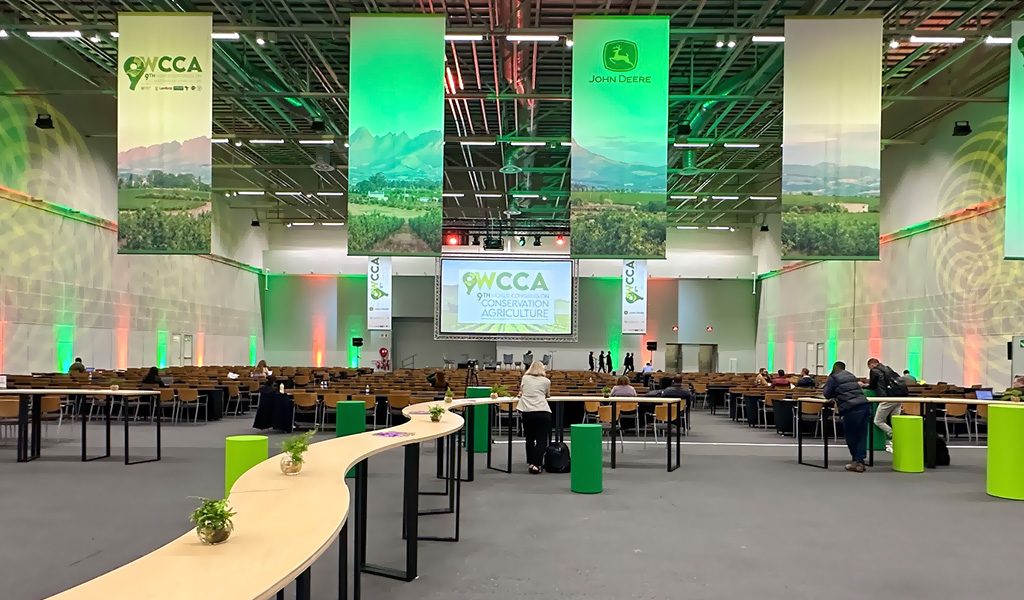
9th World Congress on Conservation Agriculture
22-24 July 2024 - Cape Town
Introduction
The 9th World Congress on Conservation Agriculture (WCCA) took place in Cape Town, South Africa, from July 22-24, 2024. This prestigious event brought together global leaders in agriculture, including farmers, scientists, policymakers, and industry professionals, to discuss and advance the adoption of Conservation Agriculture (CA). The theme of the congress, “Cultivating Resilience: Conservation Agriculture for a Changing Climate,” highlighted the critical need for sustainable farming practices that can withstand the pressures of climate change and ensure food security for future generations.
Background
Conservation Agriculture is based on three foundational principles: minimal soil disturbance, maintaining a permanent soil cover, and crop rotation. These practices are designed to enhance soil health, increase biodiversity, improve water retention, and reduce the environmental footprint of farming. The WCCA provides a platform for knowledge exchange, collaboration, and the development of policies that support sustainable agriculture.
Objectives of WCCA 2024
The primary objectives of the 9th WCCA were:
- Practical solutions to enhance CA adoption and scaling out/up even further and faster with special reference to Africa.
- Practical methods and examples by way of case studies, of dealing with real or perceived challenges in the CA system. This include nutrient stratification, integrated soil fertility and acidity management, weeding, livestock integration and integrated pest management.
- Monitoring, quantifying and measuring soil health.
Key Highlights
- Opening Keynote: The congress was inaugurated by Dr Ivan Meyer, Western Cape Ministers of Agriculture, Economic Development and Tourism, RL Bosoga from the South African Department of Agriculture and Beth Bechol, Deputy Director General of Food and Agriculture Organisation (FAO) of the United Nations who emphasised the country’s commitment to promoting sustainable farming practices in response to climate challenges. The keynote address highlighted the importance of CA in achieving national and global sustainability goals.
- Scientific Sessions: The congress featured over 150 presentations and discussions on various aspects of CA, including soil health management, climate adaptation strategies, and the socio-economic benefits of CA. Notable presentations included research on the role of CA in mitigating labour bottlenecks and improving productivity of smallholder conservation agriculture farmers in Sub-Saharan Africa through mechanisation.
- Panel Discussions: High-profile panel discussions included representatives from leading agricultural research institutions. Topics covered included ‘The Future of Conservation Agriculture’, ‘Challenges to Small-Scale Farmers’ and ‘Compatibility between Conservation Agriculture and Agroecological Production’.
- Field Visits: Delegates had the opportunity to visit Langgewens Research Farm in the Swartland, practicing CA. This visits showcased the practical benefits of CA, including improved soil fertility, water conservation, and increased crop yields in semi-arid environments.
- Exhibition: The congress featured an extensive exhibition where companies and startups showcased cutting-edge technologies, such as precision farming tools, drought-resistant crop varieties, and sustainable farming equipment.
Challenges Addressed
The congress also highlighted several challenges that need to be addressed to accelerate the adoption of CA:
- Adoption Barriers: Many farmers, particularly smallholders, face significant challenges in adopting CA practices, including lack of access to knowledge, resources, and appropriate technology.
- Policy and Institutional Support: There is a need for stronger policy frameworks and institutional support at both national and regional levels to promote CA.
- Climate Change: The increasing unpredictability of climate patterns poses challenges to the consistent application of CA practices, especially in regions vulnerable to extreme weather events.
Outcomes and Recommendations
The 9th WCCA concluded with a set of recommendations aimed at promoting CA on a global scale:
- Strengthening Research: Increased investment in research to develop region-specific CA practices that address local agricultural challenges.
- Capacity Building: Expanding training and extension services for farmers, particularly in Africa, to enhance their ability to implement CA practices effectively.
- Policy Advocacy: Encouraging governments to develop and implement policies that provide incentives, financial support, and technical assistance for CA adoption.
- Global Partnerships: Promoting international collaboration to share knowledge, technologies, and best practices related to CA.
- Monitoring and Evaluation: Establishing robust systems to monitor the environmental, economic, and social impacts of CA practices.
Conclusion
The 9th World Congress on Conservation Agriculture in Cape Town was a significant milestone in the global movement towards sustainable agriculture. By bringing together a diverse group of stakeholders, the congress provided a platform for sharing innovations, discussing challenges, and developing strategies to promote CA. As the world continues to face the dual challenges of climate change and food security, the outcomes of this congress are expected to play a crucial role in shaping the future of global agriculture.
More Past Events
Coming Soon